A new roof is a great way to improve not only the aesthetics and weather protection of your home, but also to increase the value of the property. But the big question is, how much does a new roof cost?
When thinking about the cost of a new roof, you need to consider:
- The size of your property
- The shape
- Materials needed/wanted
- What is under the current felt of the roof
- Labour and location
- How easy the property is to access
All the above can affect the final price you will pay for a new roof. Keeping these in mind, keep reading to discover our roof replacement cost guide.
At-A-Glance Cost Of A New Roof UK
Expect to pay a minimum of £4,500 for a brand new roof. The prices below are a guide and not exact quotes, as the final cost can vary depending on factors such as where you live, the materials you want to use, and the size of your home.
Property Type | Roof Size | Approximate Cost |
2-bed terrace | 60 meter squared | £5,500-£10,500 |
3-bed semi-detached | 80 meter squared | £7,500-£12,500 |
4-bed detached | 120 meter squared | £10,000-£15,000 |
Some smaller, flat roofs are typically cheaper and usually cost around £1,000 to £3,500, depending on the size and material you choose.
When Does A Roof Need Replacing?
A roof needs replacing when you can no longer perform repairs on it or every 20-30 years, whichever comes first. For example, if your roof has missing shingles/tiles, constant leaks, or is showing signs of damage like sagging, these are signs that it’s time to get a roof replacement. Other things to look out for are:
- Persistent moss growth
- Daylight visible through your roof boards
- Cracked or curling tiles
- Severe granule loss
- Clogged gutters (this can lead to roof damage)
It is also recommended that you have a professional roofer inspect the condition of your roof if it is over 15-20 years old. This can spot early signs of damage that might be able to be repaired, or determine if you need a roof replacement.
What Can Affect The Average Cost Of A New Roof?
More surface area of your roof means more materials and labour. Shape matters too. A simple two-slope roof is quick. Add hips, valleys, dormers or skylights, and the job gets fiddly. More cutting. More flashing. More time.
A common pattern LD Roofing Services has seen: A basic re-tile quoted at about £6,000, then the homeowner adds a dormer, making the quote jump to around £9,500. This is the same house, but it now requires more detailed work.
This is where prices vary the most.
- If you’re on a tighter budget, felt roofing is one of the cheapest options, usually lasting between 10 and 20 years. It’s often used for smaller or flat roofs and can be installed quite quickly.
- EPDM rubber roofing costs a bit more but offers better durability, often lasting around 25 to 30 years. It’s great for flat roofs and has fewer seams, which means fewer leak points.
- For pitched roofs, concrete tiles are the most common and affordable choice. They tend to last about 30 to 40 years and are easy to maintain. If you prefer a more traditional look, clay tiles are a step up in both price and lifespan, and they can last anywhere from 40 to 60 years.
- Then there’s natural slate, which is the premium option. It’s beautiful, timeless, and can last over a century if properly maintained.
- Finally, metal roofs (like zinc or steel) are becoming more popular for modern homes because they’re lightweight, sustainable, and last anywhere from 50 to 100 years.
In short, the material you choose will affect not just the upfront cost but also how long your roof lasts before you ever need to think about it again.
Looking for specific roof material prices? Take a look at our Fibreglass Roof Cost Guide, our Rubber Roof Cost Guide, or our Slate Roof Cost Guide.
No one loves this part, but it matters. Rotten rafters, tired battens, crushed insulation, dodgy ventilation. Once the cover comes off, problems are easier to spot and fix. Stripping and disposing of the old roof typically costs between £900 and £2,500. If timber repairs are needed, add a bit more.
Labour is usually the largest single slice. Roughly 40 to 60% of the total. Prices trend higher in London and the South East. Rural or northern areas can be a touch lower. The busy season also nudges quotes up. Spring and early autumn often give you more flexibility.
A roof replacement always requires safe access to the property. Homes with chimney work or taller roofs will typically require scaffolding and more time to complete the project. Scaffolding hire will increase the overall price of the job and can cost around £400 per day. If the scaffolding needs to be placed on a public footpath or highway, you will need to double-check with your local authority if you need a pavement licence. These fees vary from council to council, but are typically from £200 upwards for 28 days.
Upgrading insulation. Replacing fascias and soffits. Swapping tired gutters. None of these is mandatory every time, but doing them while scaffolding is up is often cheaper than coming back later.
Typical Cost Breakdown
When you look at what makes up the total price of a new roof, materials usually account for about a third of it. This includes tiles or slats, underlay, battens, fixings, and any smaller components that go into the build. Labour is the biggest factor overall, often taking up forty to sixty per cent of the cost, since roofing is skilled, physical work that requires both safety equipment and experience.
Removing and disposing of the old roof adds another chunk, usually between £900 and £2,500, depending on how much waste there is and how easy it is to access your home. Scaffolding can cost around £600 to £1,200, depending on the height and layout of the property.
If your project includes upgrades to insulation or ventilation, expect that to add roughly £300 to £800. Replacing fascias, soffits, and gutters typically costs between £600 and £1,500 if you decide to do those at the same time.
Finally, it’s smart to set aside a small contingency budget of around ten to fifteen per cent. Once the roof is stripped back, unexpected issues can pop up, like damaged timbers or hidden water damage, and having that buffer means you won’t be caught off guard.
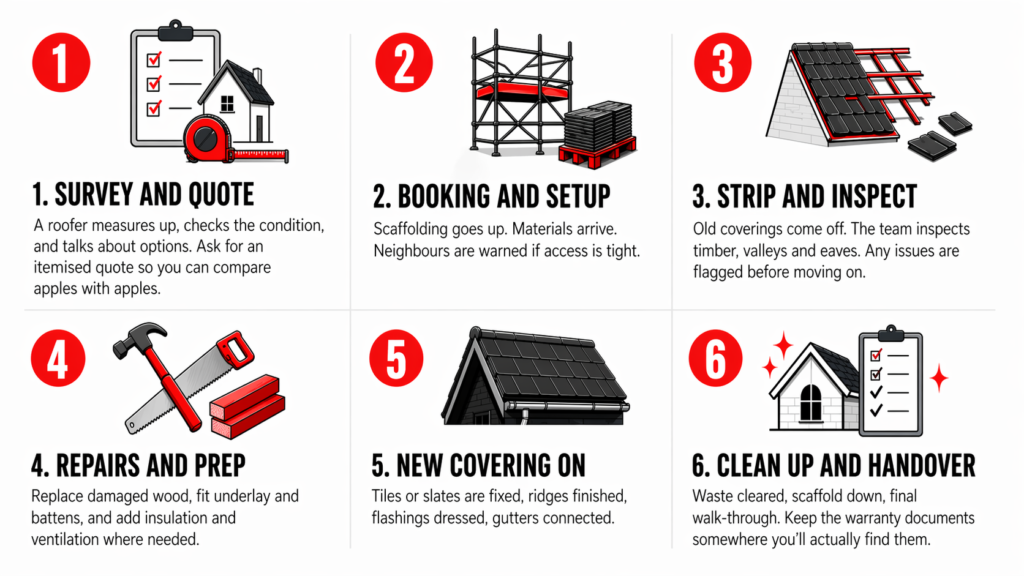
What A New Roof Process Feels Like
Roof Replacement Hidden Costs
There are additional points of a new roof installation that can add to the final cost. Below, we’ve listed some of the common add-ons that will increase the price of your roof replacement.
Insulation
Possibly one of the best value-adding extras is upgrading the insulation of your roof while you have it replaced. This can reduce energy costs and improve your comfort in the long run. The two types of insulation are generally:
- Warm roofs: This is where continuous installation is laid above the deck or rafters. This way of insulating simplifies condensation control and reduces heat loss.
- Cold roofs: This is where the insulation is laid in between the rafters to encourage effective cross ventilation.
Your roofing specialist will discuss your options and let you know which best suits your property and needs.
Skylights and Roof Windows
Adding or replacing new/damaged skylights and roof windows will affect the final cost of the roof replacement. However, it will add extra ventilation to the property while increasing the level of natural light that enters your home.
If you are interested in adding new roof windows, typically, you will need approval from Building Regulations first.
Guttering, Fascias, and Soffits
Replacing fascias (the board that runs along the roof’s edge), soffits (the panels visible on the underside of the roof’s overhang), and guttering while you are replacing your roof could make perfect sense if you want to upgrade them or they’re damaged beyond repair. However, this will call for extra labour and materials, which will add to the overall price of the roof replacement.
Structural Repairs
Sometimes, once a roof repair has been started, it’s easier to spot signs of structural damage that will need repairing too. Things such as split rafters, rotted decking, and damaged fascias or soffits are some of the most common issues.
Structural damage will need to be repaired at the same time as the new roof installation; otherwise, further down the line, your new roof might become pointless when the structural damage inevitably gets worse. Try to keep a contingency in mind for your budget that will allow you to have wiggle room for unexpected repairs like these.
Honourable Mentions
- Awkward access that needs extra scaffold lifts or protection
- Asbestos on very old roofs or outbuildings
- Waste overrun if there are multiple old layers
- Extra ventilation to meet current guidance
- Weather delays that extend labour
- Mid-project material changes
A clear, written scope helps here. Ask the roofer to note what’s included and what would count as a variation, with prices where possible.
Top Takeaways
- Be prepared to typically pay £4,500 upwards for a new roof.
- Ensure you get clear quotes that note everything about the roof replacement, like the materials you’ve requested etc.
- Choose a roofing specialist who talks to you without using confusing jargon.
- Sometimes, a cheaper roofing quote is not always the best!
Roof Replacements From LD Roofing Services
LD Roofing Services Ltd has over 25 years in the roofing industry and is a highly rated roofing specialist. We offer all types of roofing services, such as roof repairs, roof replacements, and roof cleaning. So no matter the property – residential or commercial – we can help you.
Our customers are extremely important to us, so we always strive to be honest and straightforward with any quote we supply, and we will give you a breakdown of the work that’s involved too. This way, you won’t be caught off guard by any nasty surprises.
Contact us today if you have any questions on how we work or if you want to see how we can help you with your roof replacement.
Roof Replacement Cost FAQs
Because several things can affect the final cost of a roof replacement, such as the size of the property, the materials used, and any add-ons you opt for, it is hard to give an exact amount. However, typically, for a 2-bedroom terrace home, the price of a roof replacement is between £7,500 and £12,500. The bigger the home, the higher the price will be.
The best way to approach this is to get three itemised quotes from three different roofing specialists. Although it can be tempting to choose the lower amount, make sure you compare the quotes line by line to ensure that all information is there, and they have taken into account everything you have asked for. Some smaller quotes may only be the “base” amount, and you may find that later down the line, extra charges are added.
With LD Roofing Services, you will always receive a clear, itemised quote that includes everything you have mentioned to us. You can, of course, make changes to this further down the line, such as adding on extra items like insulation, but please be aware that this will come at an extra charge.
We usually advise having a contingency of around 10 to 15% for those “just in case” moments. Things can creep up when the roof replacement begins. You may find that the rafter needs replacing, or you want new guttering too. Having a contingency will allow you to sleep more easily knowing you have the funds to cover these costs.
In short, the answer is yes. A new, stronger roof will keep water out, keep warmth in, and increase buyers’ confidence should you sell the property later. It should also save you from having to make costly repairs every time there is bad weather, so in the long run, the initial investment will save you money.