
Rubber roofing is a durable and low-maintenance option for garages, extensions, garden rooms, dormers, and other flat roofs. However, the rubber roof price can vary considerably depending on the size of the roof, its condition and the amount of preparation required.
As a general guide, professional rubber roofing costs are often around £70 to £100 per square metre for a straightforward installation. The final cost can be higher if the existing covering needs to be removed, the timber deck is damaged, insulation is required, or access to the roof is difficult.
In this guide, we will explain the typical rubber roofing costs, what should be included in your quote, and when it may be more sensible to repair or replace an existing rubber roof.
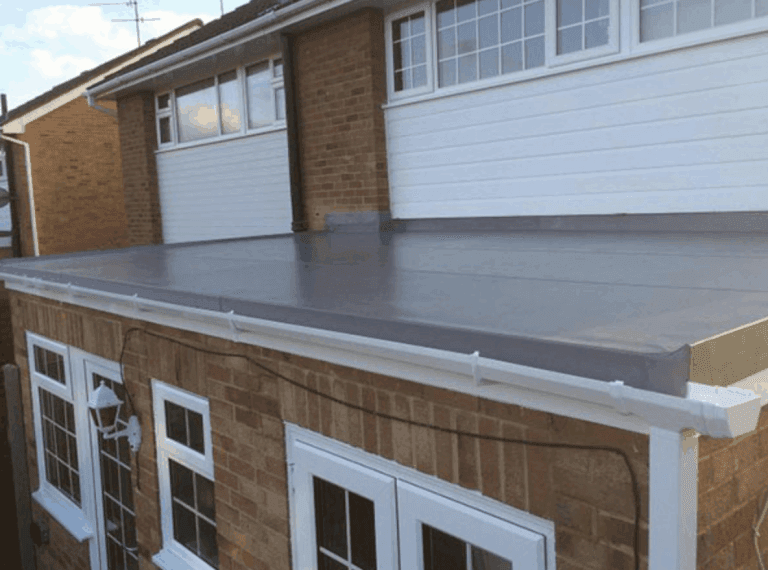
How Much Does a Rubber Roof Cost?
The average rubber roof price is usually calculated using the size of the roof in square metres.
For a simple installation on a structurally sound, prepared roof deck, rubber roofing costs may start at around £70 per square metre. More involved projects can cost £100 per square metre or more.
The table below provides estimated prices of what you could expect to pay.
|
Rubber roofing project |
Approximate roof size |
Estimated rubber roof price |
|
Small shed or porch |
5 to 10m² |
£500 to £1,000 |
|
Garden room or small outbuilding |
10 to 15m² |
£700 to £1,500 |
|
Single garage |
12 to 18m² |
£900 to £1,800 |
|
Small home extension |
15 to 25m² |
£1,300 to £3,000 |
|
Double garage |
25 to 35m² |
£1,500 to £3,500 |
|
Larger residential flat roof |
35m² or more |
Quotation required |
These figures are estimates rather than fixed prices. A roof survey is the most reliable way to calculate the cost of your individual project.
What is Included in the Cost of a Rubber Roof?
A professional rubber roof price typically includes more than just the material itself. Depending on the project, your quotation may include:
Roof inspection and measurements
A professional roofer will perform an inspection of the existing roof and measure the area. They should also check for signs of leaks, trapped moisture, poor drainage, and damaged timber.
EPDM rubber membrane
The membrane is the main waterproof layer. Different brands, thicknesses, and specifications are available, so the product used can affect the total cost.
Adhesives and primers
Specialist adhesives are needed to secure the membrane to the roof deck. Contact adhesive and primers may also be required around edges, corners, and roof details.
Roof trims and edge details
Trims help protect the edges of the membrane and create a neat finish. Gutter edges, wall upstands, and corners must all be properly sealed for the roof to have a long lifespan.
Labour
Labour includes tasks such as:
- Preparing the surface
- Positioning the membrane
- Applying adhesives
- Completing the edges
- Checking the finished roof
Removal of the existing roof covering & Waste Disposal
If the old felt, rubber, or other roof covering needs to be stripped away, this may be included in the quotation. A complete replacement can also produce old roofing material, damaged boards, and general building waste that needs to be removed. You should check whether removal and disposal are part of the quote before accepting a final price.
Final checks and guarantee
The roofer should thoroughly inspect the completed installation and explain the workmanship guarantee and product warranty that apply.
Work That May Not be Part of the Final Cost
Some work may not be included in a basic rubber roof price, and will be charged separately. You may need to consider if the following jobs need completing as well, and place some extra cash aside:
- New roof decking
- Timber and joist repairs
- Roof insulation
- Scaffolding and safe access to the roof
- Guttering and drainage
- Roof lights, vents, and pipework
Why Install Rubber Roofing?
Although many different styles and textures may be used to make residential roofs, functionality is far more crucial than aesthetics.
Although they are sometimes disregarded, roofs shield our homes from the elements, wild animals, and other dangers. As a result, they are an essential component of any building.
Rubber roofs may not be the most appealing option, but the variety of advantages they offer more than makes up for this.
Rubber roofing, which is frequently used on flat roofs, requires little maintenance and, with proper care, can endure for more than 50 years. They are an excellent substitute for felt roofing since they are watertight, moss- and algae-proof, and are simple to fix.
A rubber roof is also extremely environmentally friendly in the way it is produced. In fact, your rubber roof can even be recycled once you’re done with it! Rubber roofs are a smart choice for any home when you consider their ability to withstand fire and lightning.
Rubber Roofing Compared With Other Materials
EPDM is not the only material available for a flat roof. The right option will depend on your budget, the property and how long you want the roof to last. Below, we’ve put together a table of the average costings of different roofing materials.
|
Flat roof material |
Typical installed cost |
Typical lifespan |
Main advantages |
Possible disadvantages |
|
EPDM rubber |
£70 to £100+ per m² |
30 to 50+ years |
Durable, flexible, low maintenance and easy to repair |
Can be punctured and requires careful edge detailing |
|
Torch-on felt |
£50 to £80+ per m² |
15 to 20 years |
Lower initial cost and widely available |
Shorter lifespan and more joins between layers |
|
GRP fibreglass |
£90 to £120+ per m² |
20 to 30 years |
Strong, seamless and has a clean finish |
Installation needs dry conditions and may cost more |
|
Asphalt |
£50 to £70+ per m² |
20 to 30 years |
Traditional and relatively affordable |
Heavy and can become brittle or crack over time |
These prices are general estimates. The condition of the roof and the work included will normally have as much effect on the quotation as the chosen material.
Should You Repair or Replace a Rubber Roof?
Not every leak means that the entire roof needs replacing. A rubber roof can often be repaired when the problem is limited to a small area.
A rubber roof repair may be suitable when:
- There is one small puncture or tear
- Damage is confined to a particular edge or corner
- A seam or roof detail has lifted
- The main membrane is still in good condition
- The roof deck underneath remains dry and solid
- The roof is relatively new
- This is the first significant problem
A professional patch or local repair may extend the life of the roof without the cost of a complete replacement.
Rubber roof replacement may be better when:
- Leaks keep returning in different places
- The membrane has shrunk or pulled away from several edges
- There are widespread bubbles, splits or loose areas
- Previous patches are beginning to fail
- Water has damaged the roof deck
- Timber joists are rotten or weakened
- The roof has poor drainage across a large area
- The roof is approaching the end of its expected life
- The repair cost is a large percentage of the replacement price
The visible leak inside a building may not be directly below the original defect. A proper roof inspection can identify the source of the water and the condition of the materials underneath.
How to look for a professional roofer to install rubber roofs
Watch out for construction in your neighbourhood. You will likely see company vans or individuals working on sheds or garages nearby.
Alternatively, check out roofers who are certified by trade associations such as CHAS and SMAS.
Any roofers that are part of this generally adhere to strict work standards, follow Health and Safety guidelines, and have positive trading histories.
Finally, you can also ask for personal recommendations from friends, family, and work colleagues.
Expert Advice From LD Roofing Services Ltd
“The condition underneath the old roof covering is just as important as the rubber membrane itself. A lower quotation may appear attractive, but homeowners should check whether it includes removing the old covering, inspecting the deck, completing the edge details and disposing of waste. A properly prepared roof will usually provide better long-term value.”
Roofing Service Calculator
Deciding to replace, repair or maintain your roof can feel like a big decision, especially when you’re unsure which service your property needs or what may be involved. Use our roofing service calculator below for a quick, free assessment to help identify the roofing service best suited to your needs.
Rubber Roofing Cost FAQs
A straightforward professional EPDM installation will often cost around £70 to £100 per square metre. The price can be higher if the project includes stripping the old roof, replacing decking, adding insulation, or arranging scaffolding. The quote you receive should outline everything your roof needs with the costings so you can understand the work that needs to be undertaken and the final estimated price.
The rubber roofing cost for a typical single garage may be around £900 to £1,800. Material and labour expenditures are usually split 55% to 45%. Two installers working a full day is the basis for the labour charges for this project. The final price will depend on the roof size and the condition of the existing boards.
A double garage rubber roof may cost approximately £1,500 to £3,500. A simple roof with a sound deck is likely to be towards the lower end of the range. Materials and labour costs are roughly divided by 60% to 40%. Based on two tradesmen working for around a day and a half, the labour expenses.
A professionally installed EPDM rubber roof can last for several decades. Some high-quality systems have an expected lifespan of up to 50 years when properly installed and maintained.
Yes. Small punctures, lifted edges, and localised damage can often be repaired. Replacement may be more suitable when there are repeated leaks, widespread damage, or rotten decking. A professional roofer, such as LD Roofing, will be able to inspect the roof and suggest the best course of action.
EPDM normally costs more to install than basic roofing felt. However, rubber roofing generally has a longer lifespan, which may make it better value over the life of the roof. You should consider the benefits as well as the cost when choosing roofing material.