If you’re thinking about a new roof and you’d rather not add more strain on the planet, you’re in good company. Loads of homeowners ask us which sustainable roof materials actually make sense here in the UK, with our sideways rain, salty sea air and surprise heatwaves. So here’s a down-to-earth guide from the team at LD Roofing Services LTD about what works, what to watch out for, and what to do once you’ve got a quote in your hands.
What makes a roof “sustainable” anyway?
It’s not just about a nice green label. A sustainable roof should:
- Use responsibly sourced materials with low embodied carbon
- Last a long time, and be repairable, not just replaceable
- Help your home keep heat in winter and stay cooler in summer
- Be recyclable or reusable at end of life
- Cope with UK weather without constant fuss
We’ll also look at the full system: insulation, ventilation, fixings, and drainage. Those parts are boring maybe, but they make the difference between a roof that simply looks eco and one that properly performs.
The best sustainable roof materials for UK homes
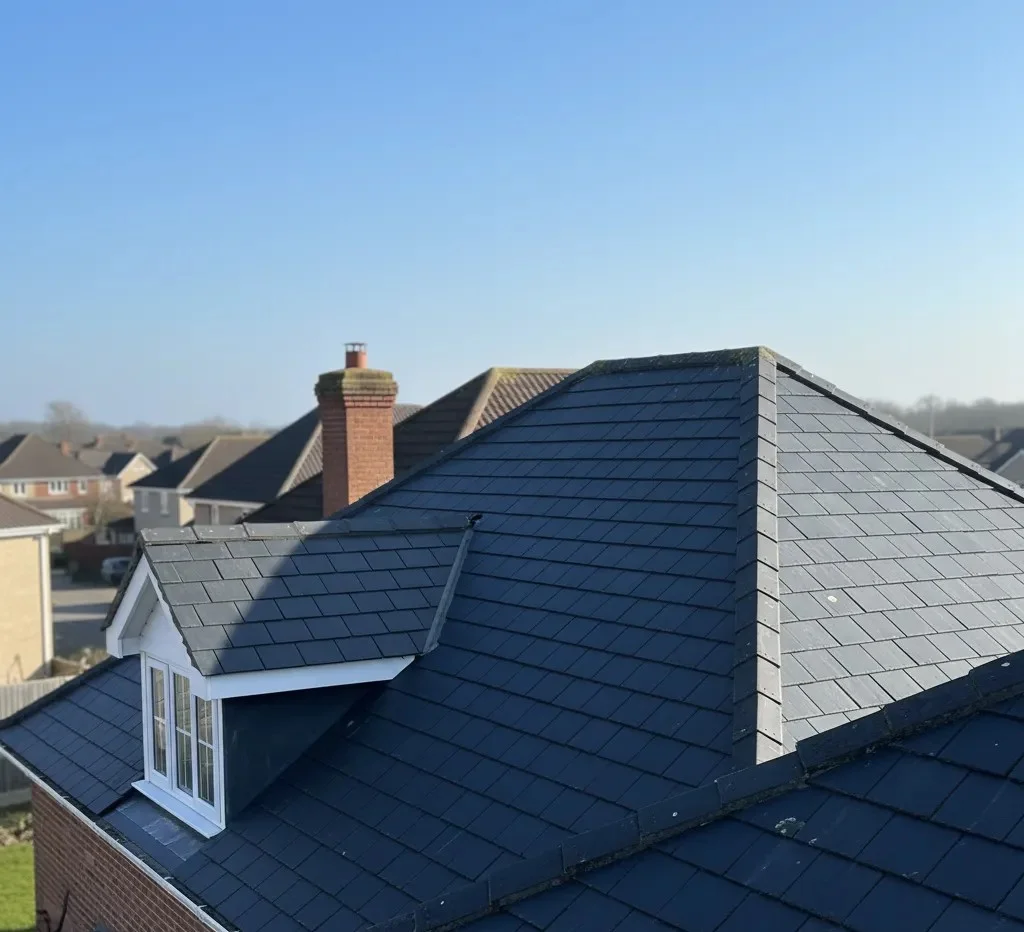
1) Natural slate (and reclaimed slate)
Benefits: Slate is tough as old boots. With decent installation and care, it can last 80–100 years, sometimes more. Reclaimed slate goes one better by reusing what’s already in circulation, which cuts down new quarrying and waste.
Where it fits: Period homes, cottages, terraces, any property that suits a classic British look.
Things to check: Weight on older structures, matching sizes and colours if you’re mixing reclaimed stock, and making sure your roofer knows their way round traditional detailing. At LD Roofing Services LTD we assess rafters, battens and fixings before we say aye to slate.
2) Clay tiles (new and reclaimed)
Benefits: Natural material, long life, easily repairable, fully recyclable. Reclaimed clay tiles reduce impact even more and often blend better with older brickwork.
Where it fits: Traditional pitched roofs across much of England and Wales, including conservation areas.
Things to check: Roof pitch, local styles, and availability of decent reclaimed batches. Ask for samples and look at them outside; colours change a bit in daylight.
3) Metal roofing with high recycled content (steel, aluminium, zinc)
Benefits: Lightweight, long-lasting, and recyclable at end of life. Many systems use a high percentage of recycled content. Standing seam aluminium or zinc are brilliant on extensions and low-pitch roofs, coated steel is great value and tough.
Where it fits: Modern designs, dormers, low-pitch sections, and coastal spots that get hammered by wind-driven rain.
Things to check: Sound during heavy rain (there are acoustic membranes that help), condensation control, correct underlay, tidy detailing around penetrations. Metal rewards good craftsmanship—there’s not much to hide behind.
4) Recycled rubber or plastic composite tiles
Benefits: Often made from recycled tyres and polymers, they imitate slate or shakes, weigh less, and install quickly. That means fewer structural worries and less transport emissions too.
Where it fits: Refurbs where weight is a concern, or if you want the slate look on a budget.
Things to check: Fire rating, UV stability, warranties, and certifications suitable for UK use. Planning officers in protected areas sometimes prefer traditional finishes.
5) Green roofs (extensive sedum)
Benefits: Adds biodiversity, slows stormwater run-off, protects the waterproof layer below, and can reduce summer heat gain. Looks lovely from upstairs windows as well.
Where it fits: Flat or low-pitch roofs on extensions, garden rooms and garages.
Things to check: Load-bearing capacity, a proper root barrier, drainage outlets and safe access for simple maintenance. We install warm-roof build-ups with root-resistant membranes to keep things watertight for the long haul.
6) Integrated solar (PV tiles or in-roof PV)
Benefits: Generating your own electricity reduces running costs and operational carbon. Integrated systems sit neatly in the roof plane; on-roof PV also works brilliantly with slate or clay if tiles aren’t your thing.
Where it fits: South to south-west facing roofs with little shading.
Things to check: Structure, cable routes, inverter location and ventilation. If you’re re-roofing anyway, bundling PV with scaffolding already saves hassle and money.
The build-up matters as much as the surface roof materials
People fixate on the visible layer, but the layers underneath is where comfort and efficiency really come from.
- Warm roof insulation: Continuous insulation above rafters reduces cold bridges.
- Ventilation: Prevents condensation in winter and stale air in summer.
- Vapour control & airtightness: A well-specified VCL plus airtight taping at junctions keeps moisture where it should be.
- Rainwater goods: Durable metal gutters are recyclable and last ages. You can even add rainwater harvesting if you’re feeling keen.
- Responsible timber & underlays: FSC/PEFC timber and take-back schemes for offcuts are small tweaks that add up.
At LD Roofing Services LTD, we design the roof as a whole system for your home, not a generic one-size-fits-all stack you’ll see on a brochure.
Cost, lifespan and upkeep (the honest bit)
Some options cost more on day one but pay you back over decades.
- Slate and clay: Higher initial cost, very long life, repairable, classic kerb appeal.
- Metal systems: Mid-to-high upfront, fast to install, fully recyclable, great for tricky roof shapes.
- Recycled composites: Lighter, often cheaper, simple fixings, modern warranties.
- Green roofs: Seasonal weeding and the odd feed, but they protect the membrane, which extends life.
- Solar: Cuts bills and carbon; pairing with a re-roof shares the scaffolding cost.
Ask for lifecycle costs, not just the lowest quote. We provide like-for-like comparisons so you can see total value, not just the sticker price.
Planning, conservation and compliance
Most like-for-like re-roofs fall under permitted development. You may need consent if you’re listed, in a conservation area, or making noticeable changes in look or height. Your roofer should document:
- Material specs and certifications
- U-value calculations and condensation risk for new build-ups
- Fixing schedules suitable for local wind zones
- A recycling and waste plan that’s actually followed, not just promised
We handle Building Control liaison and keep the paperwork tidy. It saves back-and-forth later, there’s enough of that in life already.
What to do after you’ve got your sustainable roofing quotation
Plenty of readers land here right after getting a quote and wonder “what now?”. Here’s a simple plan:
- Book a proper survey review: Walk the roof with photos and notes. Ask what’s being replaced, what’s being kept, and why.
- Request a clear specification: Layer-by-layer build-up, fixings, insulation thickness, ventilation paths, and manufacturer warranties.
- Compare like-for-like: If you’re weighing different sustainable roof materials, make sure each quote covers scaffolding, skips, lead (or lead alternatives), flashing details and any timber works.
- See and feel samples: Hold them up against your brickwork and windows at different times of day. The colour shift is subtle but real.
- Check credentials: Insurance, trade memberships, recent jobs you can go and look at.
- Agree on a weather plan: Roofing is weather-sensitive here, of course. We outline sequencing and temporary protection so your home stays dry if the heavens open.
- Plan aftercare: Annual inspections aren’t glamorous, but they catch tiny issues before they become big ones. As a company we offer affordable maintenance visits.
Why homeowners pick LD Roofing Services LTD
- Know-how you can see: From reclaimed slate heritage work to slick standing seam and green roofs, we’ve done the lot.
- Straight talking: We’ll tell you when the premium option is worth it and when a simpler route makes more sense.
- Responsible sourcing: We prioritise products with strong sustainability credentials and clear recycling routes.
- End-to-end service: Survey, design, install, aftercare. We can be your one point of contact throughout the entire journey.
Quick questions, quick answers
Will a sustainable roof improve my EPC?
Usually yes. Better insulation and airtightness help, and solar definitely moves the needle. The outer layer matters, but the system below is doing a lot of the heavy lifting.
Is a green roof high-maintenance?
Not really. Expect seasonal checks, a bit of weeding, and watering during dry spells. We can bundle maintenance into your aftercare if you like.
Can I reuse my old tiles?
Often. We reclaim what’s sound, source matching reclaimed stock where needed, and recycle the rest responsibly. There’s less waste, and the roof keeps its character.
Ready to add sustainable roof materials to your property?
If you’d like tailored advice on sustainable roof materials, a friendly site survey, or just a clearer spec than the one sitting in your inbox, give LD Roofing Services LTD a ring on 01604 372453 or complete our online contact form. We’ll help you choose a roof that looks great, lasts for decades and does right by the planet without making things more complicated than they need to be. There’s plenty of choice, and we’ll make sure you pick the one that actually fits your home.