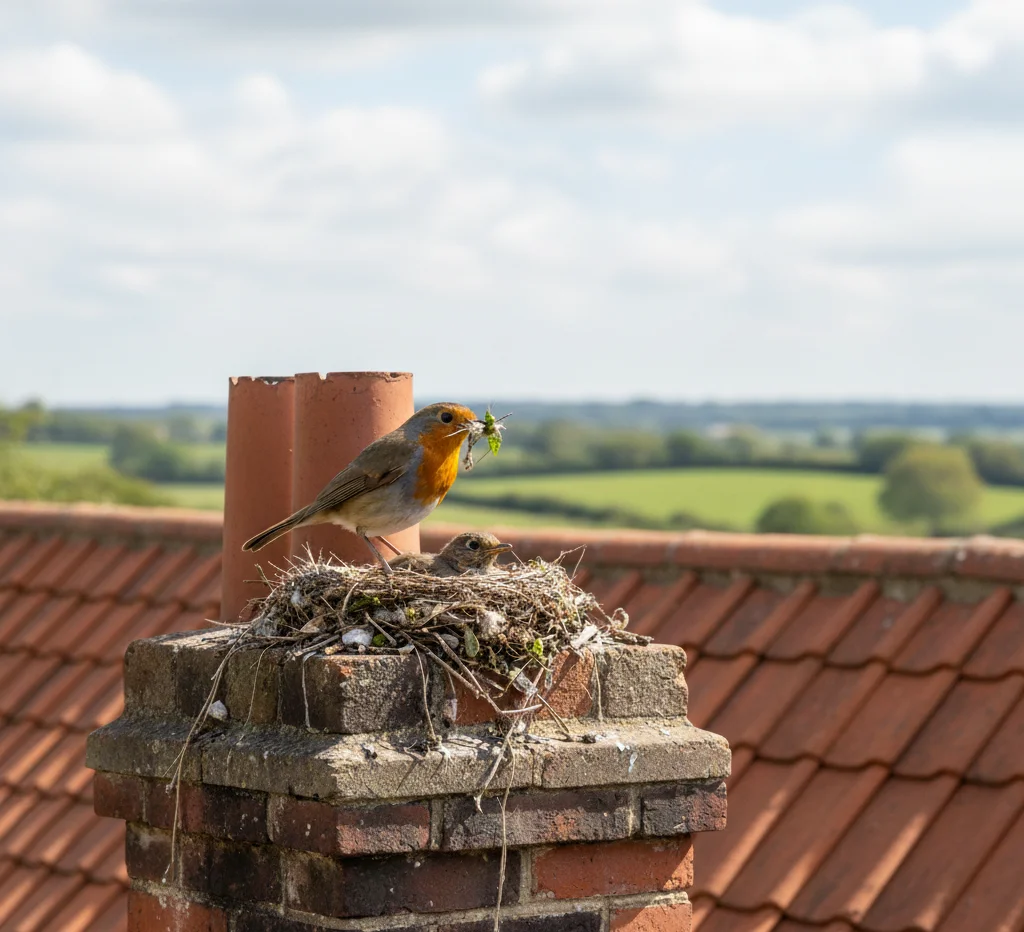
If you’ve heard scratching in the flue or found twigs falling into your fireplace, you’re not alone. Jackdaws, rooks and even swifts love the cosy shelter of a chimney. The trouble is, a nest can block the flue, increase fire risk and cause dangerous fumes to spill back into the home. In this guide we’ll walk through how to stop birds nesting in chimney spaces the right way – humane, legal and effective – with practical tips from the team at LD Roofing Services LTD.
First things first: the law and what “humane” actually means
All wild birds, their eggs and active nests are protected in the UK. That means you must not remove or disturb a nest that’s in use. In most cases, any removal work has to wait until the breeding season is over and the birds have gone. As a rule of thumb, late summer to winter is the safe window for remedial work, though timing varies by species and location. If you’re unsure, assume it’s protected and get professional advice.
Why the fuss? Besides being the law, it’s also safer. A blocked flue can lead to carbon monoxide build-up and chimney fires, so the correct approach is to plan prevention and removal at the right time, then proof the chimney so it doesn’t happen again.
Signs you’ve got a nest (or one in the making)
- Twigs, straw or soot falling into the hearth
- Persistent chattering calls from the pot, often jackdaws
- Soot smells or smoke spillage when you test the fire
- Sudden poor draw in otherwise well-behaved appliances
If any of these show up during the heating season, don’t light the fire. Call a competent professional and install or test a carbon monoxide alarm while you wait.
The humane, legal sequence to follow
- Pause and assess
Stand down your fireplace or stove. Take a look from ground level for bird activity at the chimney pot. If you can see birds regularly entering with nesting material during spring or summer, treat the nest as active and leave it be until the season ends. - Book a professional inspection
A trained sweep or roofing specialist can confirm the level of blockage and advise on timing. For gas, solid fuel or biomass appliances, you should only use competent, recognised trades who understand flue performance and safety. - Schedule removal at the right time
Once the nest is definitely empty and out of season, the debris can be removed safely with specialist rods, vacuums and cameras. Many homes plan this between September and February to avoid disturbing birds and to be ready before colder weather. - Proof the chimney straight after
The golden rule in how to stop birds nesting in chimney pots long term is to install the right guard or cowl on the same visit if possible. Otherwise, birds can rebuild astonishingly fast.
Choosing the right bird guard or cowl
Not all terminals are equal. You want a solution that keeps birds out without hurting flue performance.
- Bird-guard chimney cowls
A purpose-made guard covers the pot with an open mesh that blocks birds and debris, while allowing smoke and gases to exit freely. Always choose models designed for your fuel type and pot size. - Open-mesh terminals for performance
Good draw matters. Guidance from industry bodies emphasises using terminals that don’t impede safe discharge of flue gases. This matters even more for thatch or where embers and heat could cause damage. - Caps for redundant chimneys
If the fireplace is permanently out of use, a ventilated cap keeps weather and wildlife out while allowing the stack to breathe. However do not fully seal as this will trap moisture and damage the stack. - Material and fixings
Go for corrosion-resistant stainless or quality coated steel, with strap or bolt fixings appropriate to the pot. Budget cowls often fail at the fixings, not the hood.
At LD Roofing Services LTD, we survey the stack, confirm pot type and appliance, then recommend a cowl or guard that matches your setup. We also check mortar, lead flashings and pointing while we’re up there, which saves a second visit if any minor repairs are needed.
Complementary prevention measures that actually work
- Annual sweep before the heating season
Even with a guard fitted, have the flue swept and checked yearly. This clears any wind-blown debris and verifies the guard is secure and intact. - CO alarm, sited and tested correctly
A carbon monoxide alarm is essential for all combustion appliances. Test it regularly and check expiry dates. - Tidy the top
Where appropriate, simple wire-frame structures or profiled guards prevent birds from perching or folding wings to drop inside. Done properly, this is a humane deterrent that stops nesting in the first place. - Alternative habitat
If you enjoy birdlife, consider putting up nest boxes away from the chimney. It’s a win-win: birds get a safer home, your flue stays clear.
What if birds are already nesting right now?
Short answer: wait it out, then act quickly. If the nest is active, you must avoid disturbance and plan removal when the young have fledged and the nest is abandoned. For species-specific timings, a local wildlife organisation or a competent sweep can advise. After that, book a sweep and fit a guard immediately so you don’t end up in the same pickle next spring.
Safety and performance: why this matters
A bird’s nest is more than a nuisance. It can:
- Block the flue and push combustion gases including carbon monoxide back into rooms
- Increase chimney fire risk as dry nesting material can ignite
- Trap moisture, accelerating decay of liners and masonry
That’s why the safest approach to how to stop birds nesting in chimney systems combines correct timing, professional removal, and reliable proofing.
Typical costs and what affects them
Prices vary by height, access, pot type and whether you have a working appliance. As a ballpark:
- Sweep and nest clearance: depends on extent of blockage and camera work needed
- Bird-guard or cowl: from budget units to premium stainless options
- Scaffold or access equipment: sometimes required on tall or tricky roofs
- Minor chimney repairs: repointing or replacing a cracked pot while we’re there often saves money long term
We’ll always give a written, itemised quote so you can compare like-for-like. You’ll see the guard model, fixings, and any repair items listed clearly.
Quick questions, quick answers
Can I just block the chimney myself?
No. Full caps on live chimneys are dangerous. Use purpose-made guards that protect birds and preserve flue performance.
When is the best time to act?
Late summer through winter is usually best, once birds have finished breeding. September is a common start point for clearances and guard fitting.
Which birds nest in chimneys most often?
Jackdaws are frequent culprits, but rooks and swifts can use chimneys too. Treat any suspected nest as protected while you confirm status.
Ready to make your chimney bird-proof?
If you’re working out how to stop birds nesting in chimney pots at your place or need a chimney repair we can help. At LD Roofing we’ve been working on residential and commercial projects across Northamptonshire for over 25 years. Using the finest manufacturers and suppliers to guarantee premium finishes which will exceed expectations.
Fill in our online contact form to get in touch with us or by calling us on 01604 372453