You hear roofers talk about soffits and fascias all the time. If you are not in the trade it can sound like jargon. This guide keeps it simple. You will learn what each part is, how they work together at the eaves, the materials to choose, the signs something is failing, and how to keep everything looking sharp for years. The goal is clarity. By the end you will know the real difference between soffit and fascia and you will be able to brief a contractor with confidence.
First – One Line Definitions
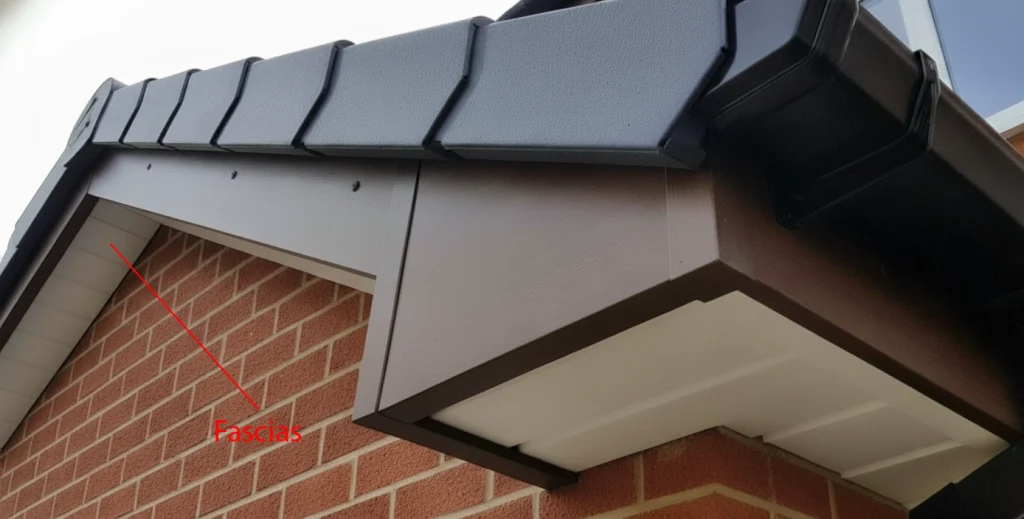
Fascia is the vertical board that caps the end of your roof rafters. It carries the gutter and creates a neat edge at the roofline.
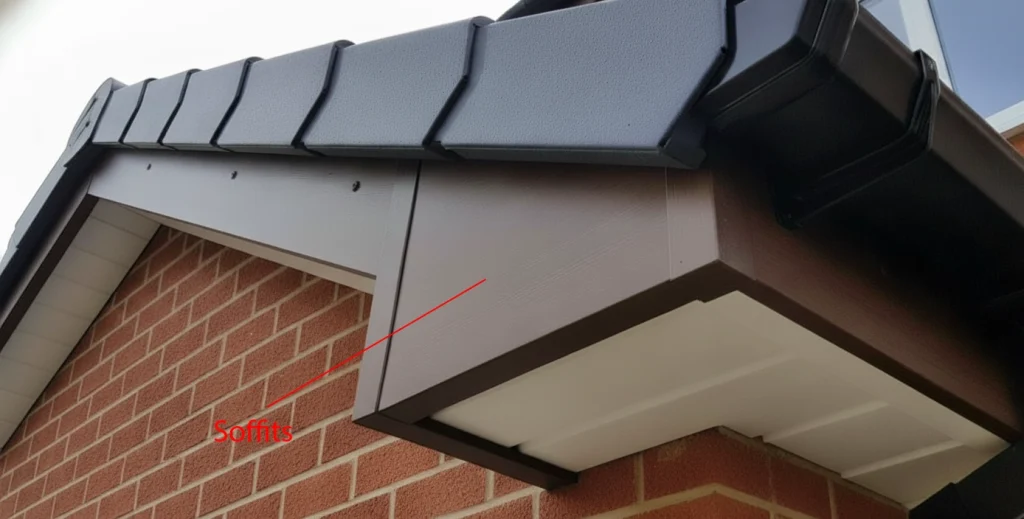
Soffit is the horizontal or sloping board that seals the underside of the eaves between the back of the fascia and the wall.
That is it – Fascia faces out. Soffit sits under.
Where Soffits and Fascias Sit On A Typical Roofline
Stand on the pavement and look up at your gutters. The board directly behind the gutter is the fascia. The panel under the overhang, running from the back of the fascia to the brickwork, is the soffit. On a gable end, the equivalent of the fascia is the bargeboard, which follows the slope of the roof instead of the horizontal eaves. You may also see eaves trays, drip edges, vent strips, and bird combs in the same zone. These items support the covering and help ventilation, but the fascia and soffit are the visible finish that ties the whole edge together.
What the Fascia Actually Does
Carries the gutter
Every metre of gutter holds a surprising weight when full of water and leaves. The fascia gives the gutter a straight, solid fixing. A tired or rotten fascia lets the gutter sag which leads to overflows and damp patches on walls.
Protects rafter ends
It caps the ends of the rafters so wind driven rain does not soak into exposed timber. A sealed fascia, plus the right underlay and trays, keeps the roof edge dry.
Finishes the look
It is the roof edge you see from the street. A clean, straight fascia makes a house look cared for. A bowed or peeling board drags everything down.
What the Soffit Actually Does
Seals the underside of the eaves
Without a soffit, you would be looking straight into the roof space. Soffits close this off neatly and block wind, rain splash, birds, and insects.
Provides ventilation to the loft
Many soffits have discreet vent slots or circular vents that allow air to move through the roof space. This limits condensation and protects timbers and insulation. You might also see over fascia vents used with solid, unvented soffit boards. The principle is the same. Fresh air comes in at the eaves and escapes higher up through ridge vents or tile vents.
Covers services
Soffits can hide cables and small pipes, which keeps the exterior tidy.
Differences Between Soffits and Fascias
Position
Fascia is vertical at the roof edge. Soffit is horizontal or slightly sloped under the eaves.
Primary job
Fascia supports gutters and protects rafter ends. Soffit closes off the underside and allows airflow if vented.
Typical width
Fascia depth matches rafter height and tile overhang. Soffit width matches the eaves projection from wall to fascia.
Visual impact
Fascia sets the roofline. Soffit reads as a shadowed plane, more subtle but very visible on bungalows and deep eaves.
Maintenance priority
Both matter, but a failed fascia shows sooner because gutters rely on it.
Materials You Will See in the UK
uPVC fascia and soffit
Popular for low maintenance and clean lines. Available in white, black, anthracite, and woodgrain finishes. Good quality boards are rigid and UV stable. Beware thin “cap over” solutions that are fixed onto failing timber without proper repair. Full replacement, with a sound timber backing or a structural uPVC board as specified, gives the best result.
Timber fascia and soffit
Traditional and strong when treated and painted on a sensible schedule. Softwood needs regular paint to stay protected. Hardwood lasts longer but costs more. Timber suits period homes and conservation areas where uPVC is not desirable.
Aluminium fascia and soffit
Slim, crisp, and long lived with powder coated finishes. Often used on contemporary builds and where a very straight line is needed. Works well with aluminium gutters for a coordinated look.
Fiber cement and composite soffit
Used mainly as soffit panels where a stable, fire resistant board is helpful, such as over kitchen doors or boiler flues. They can be plain or slotted for ventilation.
Ventilation Explained (In Plain English)
Good roofs breathe. Warm air in the house holds moisture. Some of that moisture tries to enter the loft. If it has nowhere to go, it condenses on cold surfaces and can rot timbers or wet your insulation.
You solve that with a simple airflow path. Fresh air in at the eaves. Stale air out near the ridge. You can achieve the intake with:
- Vented soffit boards with continuous slots or spaced circular vents
- Over fascia vents that sit on top of the fascia under the first row of tiles
- Combination systems when the soffit design is solid but airflow is still required
Outflow usually comes from ridge vents or tile vents. Your installer should match the intake and outflow rates so air can move freely.
How Gutters, Fascias, and Soffits All Work Together
Think of the eaves as a small system. The membrane or eaves tray carries any water under the tiles out into the gutter. The gutter is fixed to the fascia at the correct fall so water runs to the outlet. The soffit closes the underside so wind does not drive water up into the loft. If any part is wrong, you get symptoms elsewhere. A sagging gutter causes damp marks on the wall, which people blame on render. A blocked vent stops airflow and can cause loft condensation, which people blame on insulation. Good detailing prevents both.
Signs Your Roofline Needs Attention
- Black streaks on walls under the gutter line
- Dripping joins and corners on the gutter after light rain
- Visible rot, peeling paint, or soft patches on timber fascia or soffit
- Wasp nests or birds getting into the eaves
- Condensation in the loft, rusty nails, or musty smells
- Wavy roofline where the gutter dips or the fascia bows
Catch problems early and fixes are simple. Leave them and you can end up with rotten rafter ends or saturated insulation.
Replacement Options and What to Ask For
Like for like timber
Great on period homes. Ask for proper timber repairs, full preparation, primer, and quality paint. Agree a maintenance schedule.
Full replacement uPVC
The tired timber is removed or stabilised, new structural boards are fixed back to sound timber, and ventilated soffit or over fascia vents are installed. New gutters finish the line. This is the common choice for low maintenance homes.
Aluminium upgrade
For ultra crisp lines. Ask for powder coated colour samples and matching gutters, and insist on stainless fixings.
Partial repair
Useful when damage is local, such as one rotten corner or a broken soffit panel. Make sure new sections match profiles and colour.
When you brief a contractor, ask them to include removal of old materials, replacement of rotten backing timbers, ventilation strategy, drip trays, bird combs where needed, and gutter realignment with the correct fall. Get photos before and after so you can see what was done.
Style Choices that Age Well
Colour
White is timeless and reflects light into porches and paths. Black and anthracite suit contemporary homes and pair well with dark windows and doors. Woodgrain uPVC can soften a modern facade if you want warmth without the paintbrush.
Profile
Square fascia looks modern and crisp. Ogee fascia has a gentle curve that suits traditional homes. Soffit can be solid for a clean plane or slotted for discreet ventilation.
Depth and projection
Deep eaves cast a pleasing shadow and protect walls but demand a tidy soffit. Shallow eaves show less soffit and put more emphasis on the fascia line.
Cleaning and Maintenance
- Wash annually with mild soapy water and a soft brush. Avoid harsh abrasives that dull the finish.
- Clear gutters in late autumn and spring to prevent overflows that mark fascia and walls.
- Check fixings and joints after storms. Re clip any loose gutter runs and seal drips at corners.
- Repaint timber on a sensible cycle before the coating fails. Small top ups beat full strip and repaint.
- Watch ventilation and keep slots or over fascia vents clear of cobwebs and paint.
Safety and Access
Working at height is not a DIY challenge for most people. Safe ladder work, scaffold, or a mobile tower is essential. If you are hiring a contractor, ask how they will access the work and how they will protect your driveway and garden. Ask where the skip will go and how waste will be handled.
Quick FAQs
Is fascia the same as bargeboard?
Not quite. Fascia runs horizontally at the eaves. Bargeboards run up the gable. They look similar and are often made of the same material.
Do I need vented soffits if I have over fascia vents?
You need an intake. It can be through vented soffits, over fascia vents, or both if the design requires it. Your installer should balance intake and ridge or tile ventilation.
Can I cap uPVC over my old fascia?
Only if the underlying timber is sound, straight, and dry. Capping is often misused on rotten boards. Full replacement is usually the better long term fix.
What size are fascia boards?
Depth depends on rafter height, tile overhang, and gutter size. Installers size the board so it covers rafter ends and sets the gutter at the right level.
Will new fascias and soffits stop loft condensation?
They help when ventilation is part of the package, but you also need good insulation, an intact membrane, and working ridge or tile vents.
Final Thoughts and a Clear Next Step
You do not need to know every roofing term to make good decisions about your home. If you remember nothing else, remember the difference between soffits and fascias. Fascia is the upright board that carries the gutter and seals the rafter ends. Soffit is the panel under the eaves that closes the underside and lets the roof breathe. Keep both sound and ventilated and your roofline will work for decades.
Ready For a Tidy Roofline with Zero Guesswork?
Your eaves protect your walls and your loft every day. A clean survey, clear photos, and an itemised scope make the upgrade simple. At LD Roofing we replace and repair fascia, soffit, and gutters across the Northamptonshire, Bedfordshire and Milton Keynes areas, with straightforward pricing and neat detailing. Whether you want uPVC, timber, or aluminium, we will match the look of your home, set the right ventilation, and leave the lines arrow straight.
Get in touch to book a roofline inspection or request a fixed, itemised proposal. Call 01604 372453 or fill out our quick online enquiry form – We will be happy to help! If you are comparing quotes around the difference between soffit and fascia, we will show you exactly what needs doing, why it matters, and what it will cost so you can decide with confidence.