
If the mortar between the bricks of your chimney is cracking, crumbling, or falling away, repointing can help restore the stack before more serious damage develops. But how much does it cost to repoint a chimney in the UK?
As a general guide, the cost to repoint a chimney is around £500 to £1,000 for a typical job, with many standard projects costing roughly £750. A small chimney with straightforward access may cost less, while a large chimney, a stack positioned in the middle of a roof, or a property requiring more complicated scaffolding can cost £1,000 or more.
The condition of the bricks, chimney height, access, mortar type, and any additional repairs will all affect the final quotation.
This guide explains the typical chimney repointing costs homeowners should budget for, what can increase the price, and how to tell whether your chimney needs repointing, repairing, or rebuilding.
How Much To Repoint A Chimney in the UK?
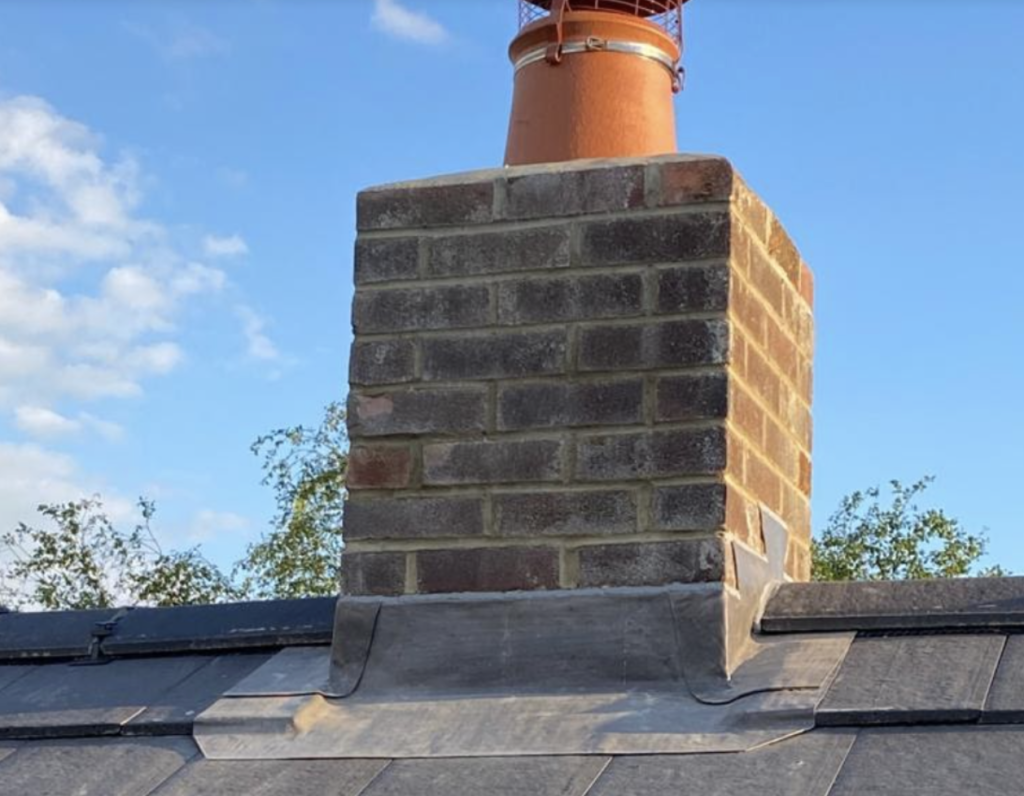
There is no single price that applies to every chimney because the amount of work involved can vary considerably from one property to another.
As a useful starting point:
|
Type of Repointing Work |
Typical Guide Cost |
|
Small, easily accessible chimney |
From around £300 |
|
Standard chimney repointing |
Around £500 to £1,000 |
|
Typical average repointing job |
Around £750 |
|
Large or difficult-to-access chimney |
£1,000+ |
|
Complex stacks requiring extensive access |
Can exceed £1,000 |
These figures should only be treated as a guide, as a roofer will normally need to assess the chimney before confirming an accurate price.
One of the biggest differences between a £500 job and a £1,000+ job is often not the amount of mortar required; it is how safely and easily the chimney can be reached. For example, a chimney positioned on the gable end of a property may be relatively straightforward to access, while a chimney in the centre of a steep roof could require much more scaffolding and working time.
What Is Chimney Repointing?
Chimney repointing is the process of removing deteriorated mortar from the joints between the bricks or stonework and replacing it with suitable new mortar.
Mortar holds the chimney together and protects the masonry from the weather. However, over time, exposure to rain, frost, wind, and changing temperatures can cause it to crack or gradually wear away. Once mortar joints begin to fail, water can penetrate deeper into the chimney. If this deterioration is left untreated, damage may eventually extend beyond the mortar to the bricks, flaunching, leadwork, or other parts of the stack.
Repointing is therefore more than a cosmetic improvement. Done at the right time, it can help prevent a relatively straightforward maintenance job from developing into a more expensive chimney repair.
For a broader overview of the costs associated with different chimney problems, see our guide to chimney repair costs in the UK.
What Affects the Cost To Repoint Chimney Brickwork?
Several factors determine the final quotation.
Chimney Height and Size
A larger chimney has more joints to rake out and refill, which increases both labour time and material requirements. The height of said chimney will also matter. A relatively low chimney can be considerably simpler than repointing a tall stack on a two- or three-storey property.
Position on the Roof
Where the chimney sits can have a major impact on the cost. For example, a stack close to the edge of the roof may be easier to reach, while a chimney close to the ridge or in the centre of the roof may require additional scaffolding or specialist access, which will come at an extra charge.
Condition of the Mortar
There is a significant difference between repairing several deteriorated joints and completely repointing a chimney stack.
If the mortar has failed extensively, more of the existing material will need to be removed before new mortar can be applied.
Condition of the Bricks
Repointing works best when the bricks themselves remain structurally sound. If the bricks are cracked, loose, badly weathered, or beginning to break apart, they may need replacing as part of the job.
More serious brick deterioration can also be a sign that repointing alone is no longer the right repair.
Type of Mortar
The correct mortar needs to be suitable for the age and construction of the chimney. For example, some older and period properties may require lime-based mortar rather than a modern cement-heavy mix. Matching the existing materials correctly is vital for both durability and the appearance of the finished chimney.
Access and Scaffolding
Scaffolding can represent a considerable part of the overall cost to repoint chimney stacks. Therefore, the price depends on the height of the property, chimney position, and complexity of the scaffold required.
Access can become particularly complicated where scaffolding needs to go over extensions, conservatories, garages, or neighbouring areas.
Additional Chimney Repointing Costs to Consider
Repointing may not be the only work required once the chimney can be inspected properly.
Potential additional costs include:
- Replacing damaged or spalled bricks
- Repairing or renewing lead flashing
- Repairing the chimney flaunching
- Replacing damaged chimney pots
- Installing or replacing chimney cowls
- Repairing surrounding roof tiles or slates
- Removing old mortar and waste
- Additional scaffolding or specialist access
This is why it is useful to have the whole chimney assessed rather than simply asking for the visible joints to be filled.
If you have an issue with birds getting into the chimney, this can be a good opportunity to discuss suitable preventative measures. Our guide explains how to stop birds nesting in chimney spaces and the different options available.
LD Roofing Services Ltd. Expert Tip: Do Not Just Cover Over Failing Mortar
Good chimney repointing involves removing loose and deteriorated mortar back to sound material before the joints are refilled. Simply spreading a thin layer of new mortar over failing joints may make the chimney look better temporarily, but it does not address the weakened material underneath.
When comparing quotations, ask how the existing mortar will be prepared and removed before new pointing is applied. The preparation is just as important as the visible finish.
Does My Chimney Need Repointing, Repairing, Rebuilding, or Removing?
One of the most important questions to ask is whether repointing is actually the correct repair.
Use this quick guide as a starting point:
|
What You Can See |
Work That May Be Required |
|
Mortar is cracking or crumbling but bricks remain sound |
Repointing |
|
Small areas of damaged mortar or brickwork |
Local chimney repair |
|
Water entering around the base of the stack |
Lead flashing or surrounding roof repairs may need investigating |
|
Failed flaunching around chimney pots |
Flaunching repair or replacement |
|
Loose, cracked, or badly deteriorated bricks |
Brick replacement or partial rebuild |
|
Bulging, leaning, or unstable chimney stack |
Structural repair or chimney rebuild |
|
Redundant chimney with extensive recurring problems |
Removal may be worth considering |
This is only a general guide. The chimney should be properly inspected before deciding on the most appropriate repair.
If the stack has deteriorated beyond the point where repointing will provide a lasting solution, read our guide to chimney rebuild costs.
If the chimney is redundant and removal is being considered instead, our chimney removal cost guide explains the different options and costs involved.
What Is Involved in the Chimney Repointing Process?
The exact method will depend on the chimney, but professional repointing generally follows several key stages.
1. Providing Safe Access
The priority is establishing safe access to the chimney. Depending on the property, this may require a scaffold tower or a more extensive scaffolding system.
2. Inspecting the Chimney
Once the chimney can be viewed closely, the roofer can inspect the mortar, brickwork, pots, flaunching, leadwork, and surrounding roof coverings. This can reveal problems that are difficult or impossible to identify accurately from ground level.
3. Removing Failed Mortar
Loose and deteriorated mortar is carefully raked out to expose solid material beneath. Dust and debris are then removed so that the replacement mortar can bond properly.
4. Applying New Mortar
The joints are refilled using mortar appropriate for the chimney’s construction.
Care needs to be taken here to create properly filled joints and a finish that suits the existing brickwork.
5. Completing Any Additional Repairs
If problems have been found with bricks, flaunching, pots, or leadwork, these may be repaired while access is already available.
Combining sensible maintenance at this stage can avoid paying for another scaffold setup a short time later.
6. Final Inspection and Clean-Up
Once the mortar has been finished and the work completed, the chimney and surrounding roof should be checked before scaffolding is removed.
Benefits of Repointing a Chimney
Save Money
While it may seem like a small expense to get your chimney repointed, the cost of dealing with a chimney stack that has been left to degrade to the point where it is no longer structurally safe can be high. By repointing your chimney, you can avoid costly repairs down the line.
Keep Your Chimney Looking Great
Like any brickwork, the visual appearance of your chimney stack will suffer if you neglect to repair crumbling and missing mortar. Without repointing, your chimney will start to look old and worn out. It is often difficult to appreciate just how much of an impact repointing can have on the overall aesthetics of your building until you see it for yourself.
Keep Your Home Waterproof
One of the risks of crumbling mortar is water damage. Water can seep into the brickwork and cause damage to various parts of your home. This is particularly true for chimney stacks, where water can enter the chimney and then make its way into other parts of the house. By repointing your chimney, you can protect your home from water damage.
Keep Your Chimney Safe
The most important reason to repoint your chimney is to keep it structurally sound and safe. Neglecting to repoint your chimney can result in property damage or even injury. By repointing your chimney when necessary, you can ensure that it remains safe for you and your family.
What Should Be Included in a Chimney Repointing Quote?
Price is important, but you should also check exactly what you are getting for your money.
A clear quotation should ideally explain:
- Which parts of the chimney will be repointed
- Whether all failing mortar will be raked out first
- The type of replacement mortar being used
- Whether scaffolding is included
- Whether damaged bricks will be replaced
- Whether flaunching, pots and leadwork have been inspected
- Whether waste removal is included
- Whether VAT is included where applicable
- How long the work is expected to take
- What guarantee or aftercare applies
Having this information makes it much easier to compare two quotations properly. For example, a £500 quote and an £800 quote are not necessarily offering the same work. One may include scaffolding, brick replacement, and minor repairs while another covers repointing alone.
Hiring a Chimney Repointing Contractor
Working on a chimney combines masonry skills with the risks involved in working at height, so choosing an experienced contractor is important.
Look for a roofer who:
- Has experience repairing and repointing chimney stacks
- Can explain why repointing is required
- Will inspect related chimney components
- Uses appropriate mortar for the property
- Has suitable insurance
- Provides a clear written quotation
- Can show examples or reviews from previous roofing work
- Explains whether repointing, repair or rebuilding represents the best option
A reputable contractor should also be willing to explain when repointing is not the right solution.
At LD Roofing Services Ltd., we have over 25 years of experience providing roofing and chimney services across Northamptonshire, Bedfordshire, and Buckinghamshire.
We can assess the condition of your chimney, explain whether repointing or another repair is required and provide a clear quotation for the work.
Call 01604 372453 or complete our online contact form to request a quote.
Frequently Asked Questions About Chimney Repointing Costs
The best way to control costs is usually to deal with deteriorating mortar before the surrounding brickwork suffers more serious damage.
It is also worth getting an itemised quotation rather than choosing a contractor based purely on the cheapest headline price. Paying less for a surface-level repair that fails quickly is unlikely to represent good value.
A straightforward chimney may be repointed within a day once safe access is available. However, larger stacks or chimneys requiring more extensive preparation can take two or three days, particularly where bricks, flaunching, or other components also require attention.
It can, but only when deteriorated mortar is actually responsible for the water ingress.
Water around a chimney can come from several different places, including:
- Failed mortar joints
- Cracked flaunching
- Damaged lead flashing
- Broken roof tiles or slates
- Damaged chimney pots
- Deteriorated brickwork
Simply repointing every leaking chimney is not always the correct solution. A proper inspection should identify where water is entering before repairs begin.
A typical chimney repointing job may cost around £500 to £1,000, with roughly £750 being a useful average guide. Small, easily accessible chimneys can cost less, while larger stacks and difficult access can increase the price beyond £1,000.
Not necessarily. Some contractors include scaffolding within their total quotation, while others list it separately.
Always check whether access costs are included before comparing quotes.
This will depend on the property and whether the chimney can be accessed safely. Some lower or more accessible chimneys may require less extensive access equipment, but many chimney repointing projects need scaffolding so that the work can be carried out properly and safely.
Repointing is normally the less extensive option when the bricks and overall structure remain sound.
If bricks are badly damaged or the chimney has become unstable, rebuilding part of or all of the stack may provide better long-term value. You can compare the likely work involved in our chimney rebuild cost guide.
If the mortar is failing but the chimney itself remains structurally sound, repointing can prevent water penetration and further deterioration. Leaving damaged mortar untreated can allow problems to spread to bricks and other parts of the chimney, potentially increasing future repair costs.