
If your chimney is leaking, shedding mortar, or looking a bit sorry for itself, you are probably trying to pin down a sensible budget before you speak to anyone. The honest truth is that chimney jobs range from quick fixes in the low hundreds to rebuilds that run into the thousands. This guide gives you clear planning bands, explains what actually drives price, and shows you how to brief a contractor so you get a watertight, long lasting result. You will also see a simple method to build your own cost model in five minutes. No fluff, just practical detail.
The Short Answer
For a typical home, small chimney repairs like local flaunching patches or a tidy flashing fix often land between £150 and £500. Full lead flashing renewal usually sits somewhere between £250 and £700 depending on access. Repointing a standard brick stack is commonly £500 to £1,000. Rebuilding sections of a stack or taking it down to sound courses and rebuilding can run from a few thousand pounds to five figures on tall or ornate stacks. Access is the wildcard, so allow a few hundred pounds for a tower or more for full scaffold when needed. Treat all of these figures as planning bands, not quotes.
What Each Chimney Repair Involves and Why it Costs What it Does
1) Repointing the stack
Repointing is the bread and butter of chimney work. A roofer rakes out loose mortar to a proper depth, cleans the joints, then packs in fresh mortar that matches the original in colour and strength. Good repointing stops wind driven rain from soaking into the stack and restores the crisp outline of the brickwork.
Typical budget:
Plan on £500 to £1,000 for a straightforward stack. Stone, tall positions, ornate details, and awkward access edge higher. If a valley or roof slope makes access tricky, build in more time and scaffold cost.
What to ask for:
Depth of rake out, mortar type, joint profile, protection of surrounding tiles, and photos before and after.
2) Repairing or replacing lead flashings
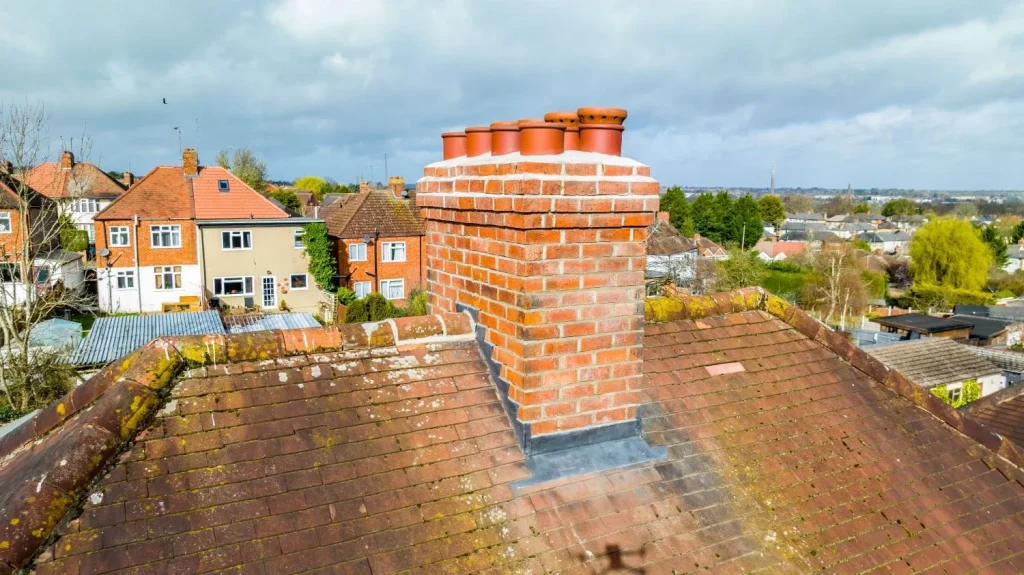
Lead flashing is the barrier that stops water where the roof meets the chimney. A sound system typically includes an apron to the front, stepped flashing into the brick joints on the sides, soakers under the tiles, and a back gutter to deal with water running down the slope.
Typical budget:
Small local repairs can be a few hundred pounds. Full renewal with correct lead codes and chases into the brickwork is usually £250 to £700 once access is factored in.
What to ask for:
Lead code and thickness, chase depth and wedge method, sealant suited to lead, whether soakers will be renewed, and how the back gutter will be formed. Ask for a neat reglet line and clean bends. You should not see random sealant smeared over the brick face.
3) Flaunching and crown repairs
Flaunching is the mortar that forms the shallow pyramid on the top slab. It sheds water and beds the pots. Cracks allow water into the core of the stack and can loosen pots in storms.
Typical budget:
Small patch repairs may be £150 to £250. Full re-flaunching is commonly £300 to £500 before access. If a pot needs re bedding or replacing, allow £100 to £200 per pot plus access.
What to ask for:
Slope that sheds water, smooth finish to resist pooling, secure bed for each pot, and a tidy junction with the brick arris.
4) Pots, cowls, and caps
Pots help with draw. Cowls limit rain entry and deter birds. Caps close unused flues so rain does not run down into a redundant fireplace.
Typical budget:
Once access is in place, supply and fit for a pot or a good quality cowl often lands between a couple of hundred pounds and £500. Capping unused flues is generally similar.
What to ask for:
Correct size for the flue, materials that can handle coastal or exposed settings, fixings that cannot shake loose, and a design that matches the look of the property.
5) Partial rebuilds and full rebuilds
If the stack is leaning, faces are spalling, or the core is saturated, you are into rebuild territory. The team will take the stack down to sound courses, rebuild using matching bricks or stone, insert a damp tray with weep vents, renew leadwork, re flaunch, and fit pots.
Typical budget:
A modest rebuild may be a few thousand pounds. Tall or ornate stacks with heavy scaffold can run to ten thousand or more. Matching bricks and specials, as well as complex details, add time and cost.
What to ask for:
Level of take down, brick or stone match, position and type of damp tray, weep vents, lead details, and how the new work will be tied into the old.
6) Flue lining and internal fixes
External repairs often go hand in hand with flue issues. A rough, leaking, or poorly drawing flue can be lined with stainless steel flexible liner or rigid systems depending on appliance and chimney.
Typical budget:
A common stainless flexible liner installed in a standard two storey house often sits around £1,000 to £2,500 depending on diameter, length, and whether a stove and new terminals are part of the package.
What to ask for:
Liner specification, insulation around the liner where required, register plate details, certification, and compatibility with your appliance.
Five Things that Can Swing the Cost
Access and scaffold
A gable end stack that a tower can reach is one thing. A mid roof stack over a glass conservatory is another. If the scaffold sits on the pavement, a licence may be needed. Ask who will arrange it and how long the scaffold is included before extra weeks start to cost more.
Height and pitch
Bungalows are quick to reach and easy to work on. Three storeys with a steep roof pitch slow everything down. A slower site is a more expensive site, even for a small task.
Materials and detailing
Lead codes, chase method, mortar choice, damp trays, weep vents, bird guards, spark arrestors, and pot type all change the price. Better detailing is a small premium that saves future hassle.
Condition once stripped
You only see the full picture once loose mortar, failed lead, and old flaunching are removed. Hidden damage to the core or surrounding tiles may need fixing there and then. Carry a modest contingency so you are not caught out.
Region and labour
Rates vary across the UK. London and the South East tend to be higher. Remote sites add travel time. Good contractors price the job honestly and schedule enough labour to finish without cutting corners.
Build a Quick Chimney Repair Budget in Five Minutes
You do not need to guess. Follow this method and you will walk into quotes with your eyes open.
Step one. Match symptom to likely fix
Damp patch near the stack and hairline cracks where lead meets brick suggests flashing. Powdery joints, missing mortar, and wind whistle suggests repointing. Loose pot or cracked top slab suggests flaunching and pot work.
Step two. Pick the planning band
Use the bands above. If your stack is tall, mid roof, or stone, choose the upper half of the range.
Step three. Add access
If the contractor says a tower or full scaffold is needed, include an allowance. Towers can be a few hundred pounds. Full elevations with several lifts are more.
Step four. Add a small contingency
Ten to fifteen percent is enough for unknowns that might appear once work starts.
Step five. Sense check
If a quote lands far below your model, check what is missing. If it lands far above, ask what is special or additional. Either way you can now have a calm, specific conversation.
How to Compare Chimney Repair Costs UK
Ask each contractor to quote the same scope, then line them up side by side.
Survey and evidence
Ask for photos from the roof and from the ground, notes on mortar condition, lead condition, and the state of the top slab. A short video that walks the issues is even better.
Clear scope of works
For flashing, list apron, step, back gutter, chase depth, and lead code. For repointing, list rake out depth, mortar type, and joint profile. For rebuilds, list level of take down, damp tray and weep vents, brick match, leadwork, flaunching, and pots.
Access plan
Tower or scaffold, any sheeting, permit needs, how many lifts, and how long the hire covers. Confirm who pays if weather or findings extend the hire.
Protection and making good
How tiles and valleys around the stack will be protected. How waste will be removed. How the team will keep the property tidy.
Programme and guarantees
Start date, duration, payment schedule, workmanship guarantee, and product warranties where relevant. For lining and stove connections, ask for the appropriate certification.
Common Signs You Should Not Ignore
- Damp staining on ceilings or walls next to the chimney breast
- White salt crystals on brickwork or plaster
- Mortar that crumbles to sand when you touch it
- Cracks in the flaunching or ponding water on the crown
- Pots that wobble in wind or look skewed
- Flashing that lifts at the chase or rattles
- Brick faces flaking off after winter
- Soot smells or poor draw when you light a fire or stove
Early fixes are cheaper fixes. Leave problems to develop and you may end up paying for a rebuild you could have avoided.
Materials and Finish that Stand Up to UK Weather
Lead
Still the go to for chimney flashings because it is durable, malleable, and repairable. Correct code and neat chasing are key. Alternatives exist but rarely match lead for service life on a chimney.
Mortar
Match strength to the brick or stone. On older buildings a lime based mortar is often appropriate because it allows the stack to breathe and moves with the seasons. Modern cement mortars can be fine on newer brickwork when chosen correctly.
Bricks and specials
A close match in size, colour, and texture keeps the stack looking original. Good suppliers can source suitable reclaimed or new bricks that sit well with existing work.
Flaunching
Needs a smooth finish and a gentle slope away from pots. Sharp edges crack. Pools collect water and accelerate failure.
Cowls and caps
Choose stainless or high quality coated products for coastal or exposed sites. Make sure caps on unused flues are breathable so trapped moisture can escape.

Repair or Rebuild?
Choose repair if the structure is sound and the defects are local. Repointing, new flashings, and re-flaunching can extend life by many years. Choose partial or full rebuild when the stack is leaning, brick faces are falling off in multiple places, or long term water ingress has soaked the core. A rebuild costs more now but saves you paying for repeated patchwork that never addresses the root cause.
Safety, Compliance, and Insurance
Safety
Chimneys are small but high. Proper access and fall protection matter. This is not a ladder job for a handyman with a sealant gun. Hire teams who describe their access plan clearly.
Compliance
Flue lining, stove connections, and structural changes may require notification or certification. Ask how compliance will be handled and keep the paperwork.
Insurance
Policies usually cover sudden damage from storms but not age and wear. If you suspect storm damage, gather photos and speak to your insurer before work starts.
Preventive Care that Actually Helps
- Clear gutters and check the flashing line each autumn and spring
- Look up at the crown with binoculars to spot cracks early
- Keep ivy and moss off the stack so moisture is not trapped
- Sweep live flues annually so liners and masonry last longer
- After heavy storms, check for shifted pots or lifted flashings
Frequently Asked Questions
How long does a typical repair take?
A local flashing repair or re-flaunching job often completes in a day once access is up. Repointing may take one to three days. Rebuilds depend on height, weather, and brick supply.
Can anything be done from inside the loft?
Not for the real fixes. The problems are at the roof junction and at the top slab. Safe external access is required to do the work correctly.
Will new flashings stop my damp for good?
If the stack and brick joints are sound, new lead flashings installed correctly are often the single most effective cure for damp around a chimney. If joints are also failing, combine flashing renewal with repointing.
Do I need to stop using my fire or stove during works?
Yes. Pause use until repairs are complete and any liners or terminals have been checked or certified.
What if my chimney repair cost quotes are miles apart?
Check scope, access, and detailing. Cheap quotes often skip back gutters or renew only one side of the flashing. Expensive quotes may include a damp tray and full four sided leadwork. Ask to see the breakdown and decide what is right for your situation.
Final Thoughts
Chimney jobs look small from the ground but they are serious when they leak or loosen. Start with the symptoms, match them to the likely fix, build a quick budget that includes access and a contingency, then ask every contractor to price the same scope. That is how you cut through guesswork and get a result that lasts.
Ready for a Straight Survey and a Fixed, Itemised Chimney Repair Cost in the UK?
Your chimney should shed water, draw properly, and look tidy from the street. At LD Roofing we inspect from the roof, take clear photos, and explain options in plain English. Whether you need flashing repairs, repointing, flaunching, pot or cowl work, a flue liner, or a partial rebuild, we price each element so you can choose.
Get in touch with LD Roofing to book your survey or request a fixed proposal. If you are budgeting for chimney repair cost UK wide, or are more local to us in the Northamptonshire, Bedfordshire or Milton Keynes area – we will measure properly, show you what we find, and give you an itemised quote so you know exactly where every pound goes. Call us on 01604 372453, or fill out our online enquiry form and we will be happy to help!